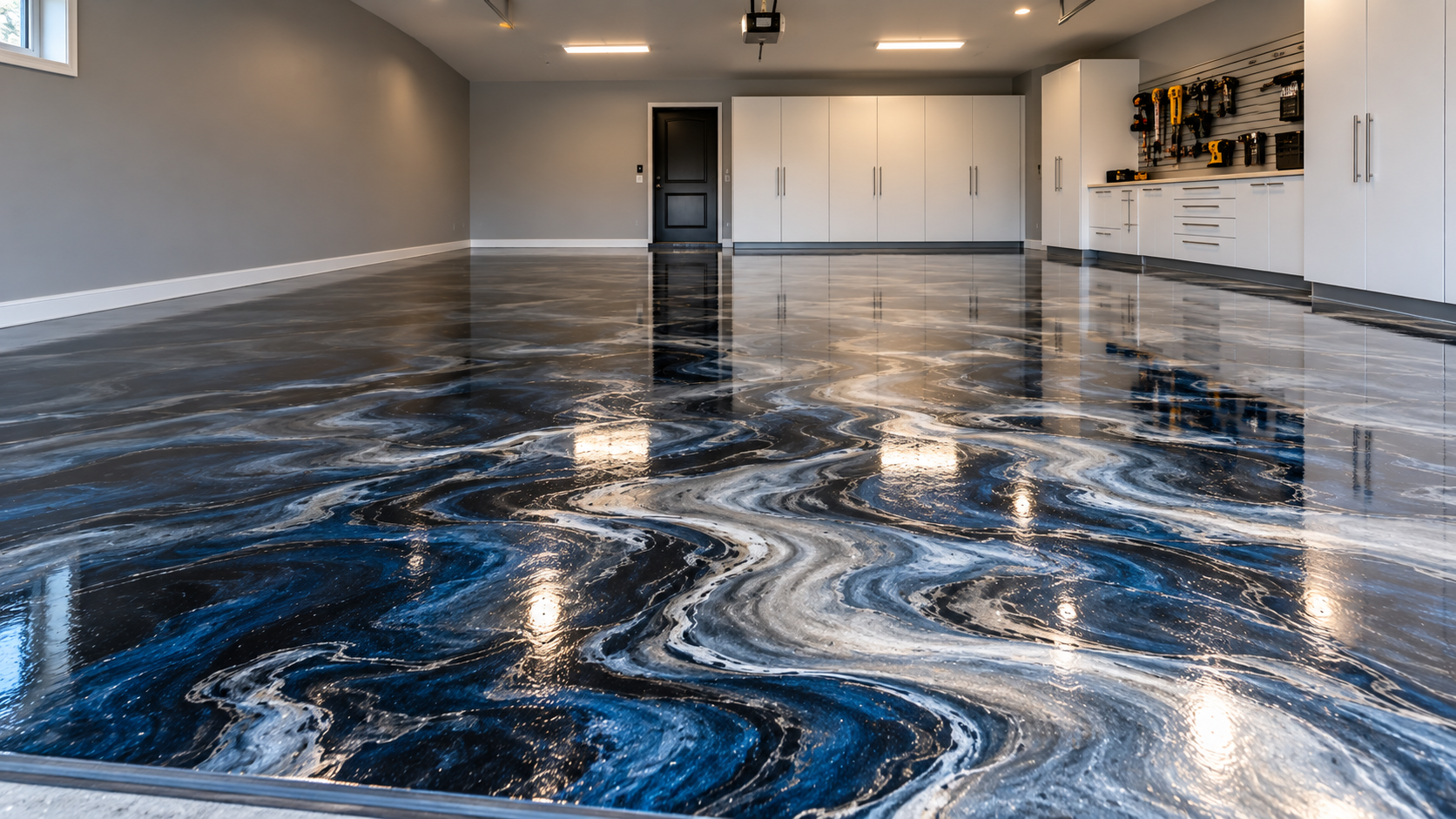
Garages
Mica turns a garage into a space you’ll want to show people. Everything garage-specific, from road salt and hot tires to the other coating systems, is on our garage page.
Explore garage floor coatingsWHITMORE LAKE ANN ARBOR SOUTHEAST MICHIGAN
Flowing swirls of mica, often called metallic epoxy, and sparkling mica flake finishes, designed with you and installed over properly prepared concrete. For garages, basements, living areas, entries, workshops and commercial spaces in Whitmore Lake, Ann Arbor and nearby communities.
Licensed & insured More than 40 years of family experience in the trades Free estimates
Call 248-692-3655Swirled mica Mica flake Homes, garages & commercial spaces
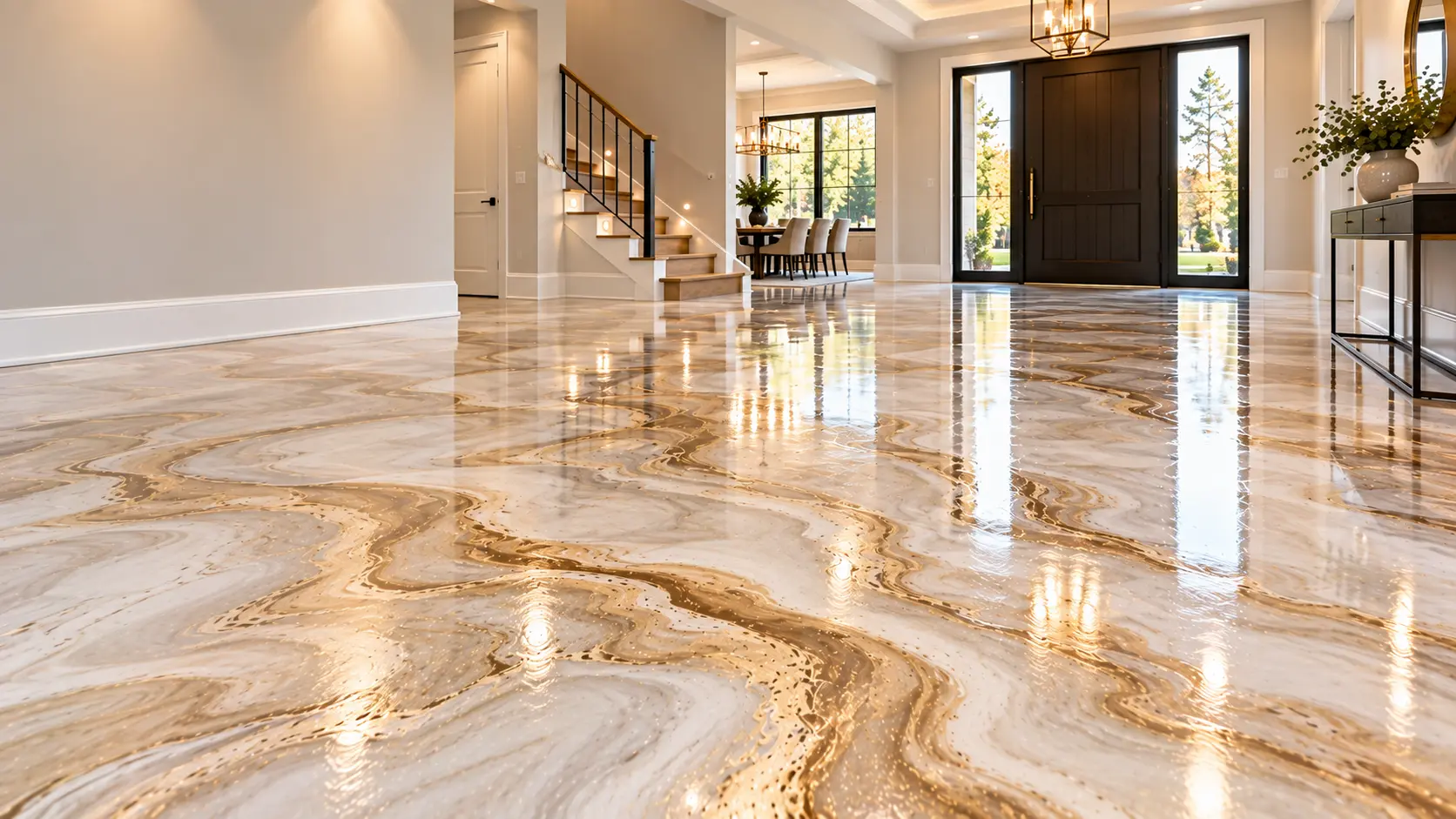
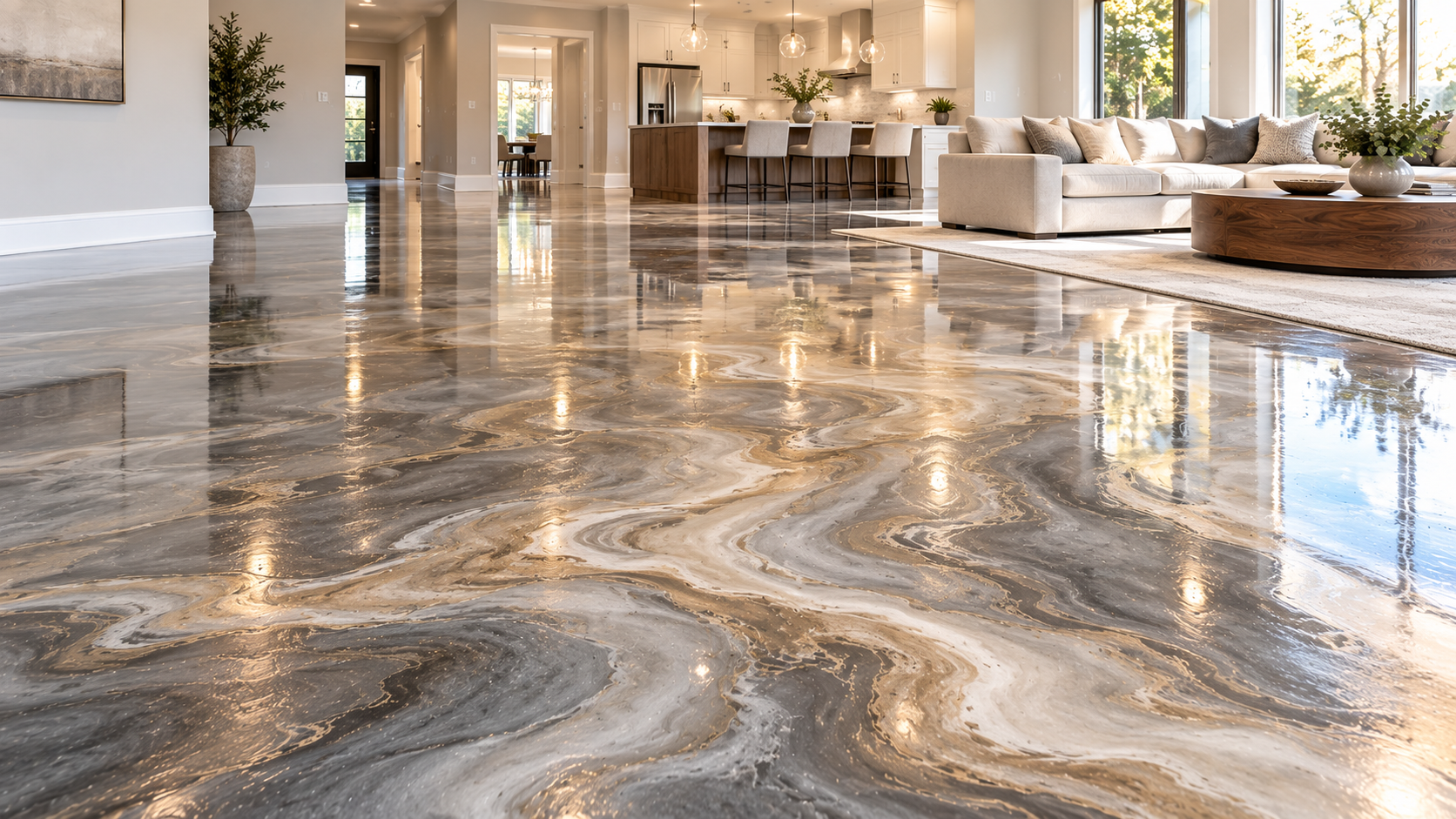
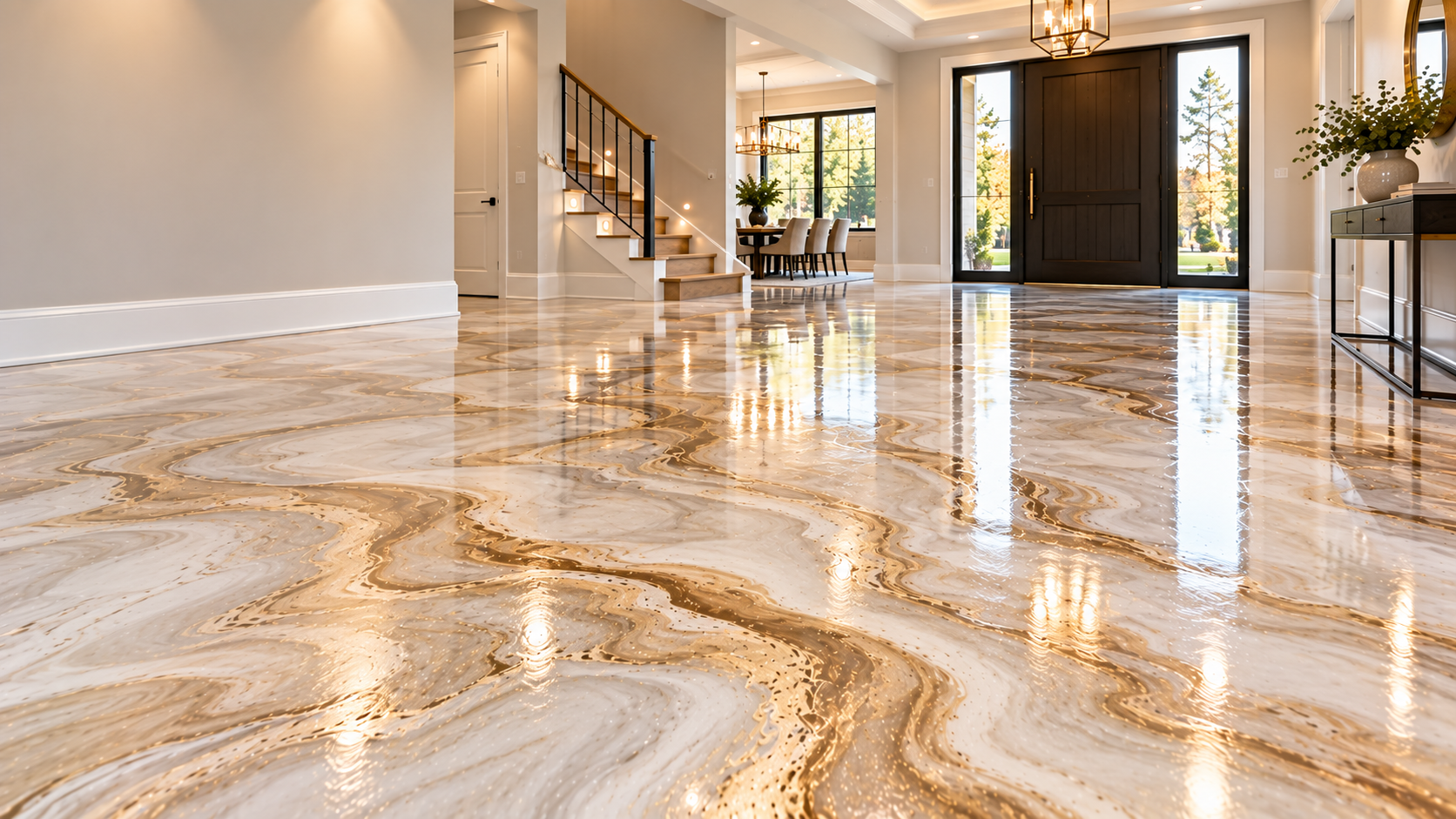
A mica epoxy floor is a decorative epoxy floor with mica built into it. Mica is a natural mineral that forms thin, flat, reflective layers, which gives the floor a shimmer and depth that plain colored epoxy can’t match.
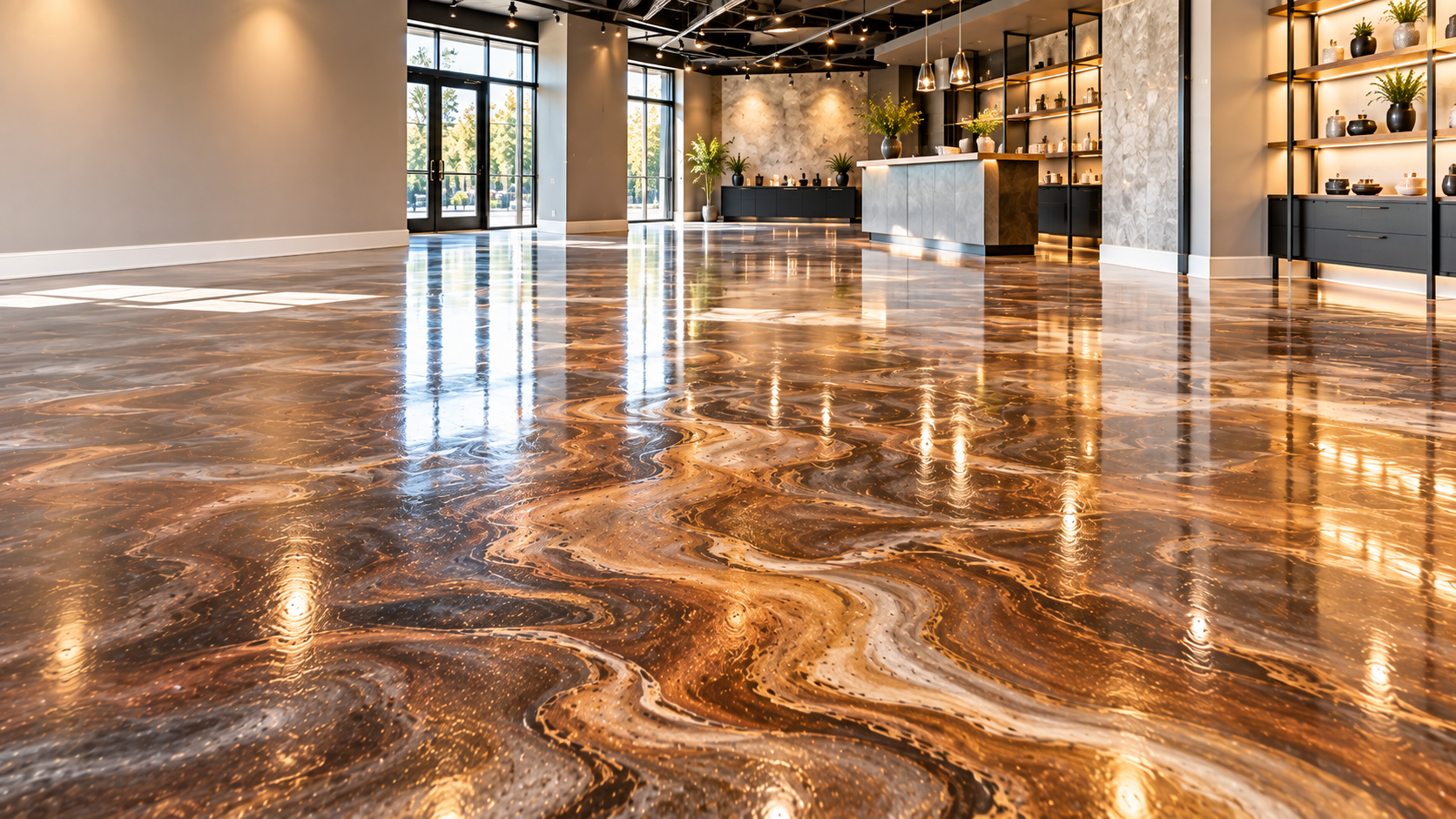
We install it two ways. Swirled mica is worked while the epoxy is still wet, so color flows across the floor like marble or moving water. Mica flake is broadcast into the base coat for a sparkling, stone-like texture. Both are sealed under a protective topcoat selected for the job.
Nothing about the pattern is printed or stamped. It forms as the floor goes down: where the pigment drifts, where colors meet and how the flakes land are different on every floor, and even from one side of a room to the other.
So when you bring us a photo you love, we can aim for the same colors, contrast and amount of movement, but not copy it swirl for swirl. For homeowners in Whitmore Lake, Ann Arbor and nearby towns, that means the floor you walk on is the only one exactly like it.
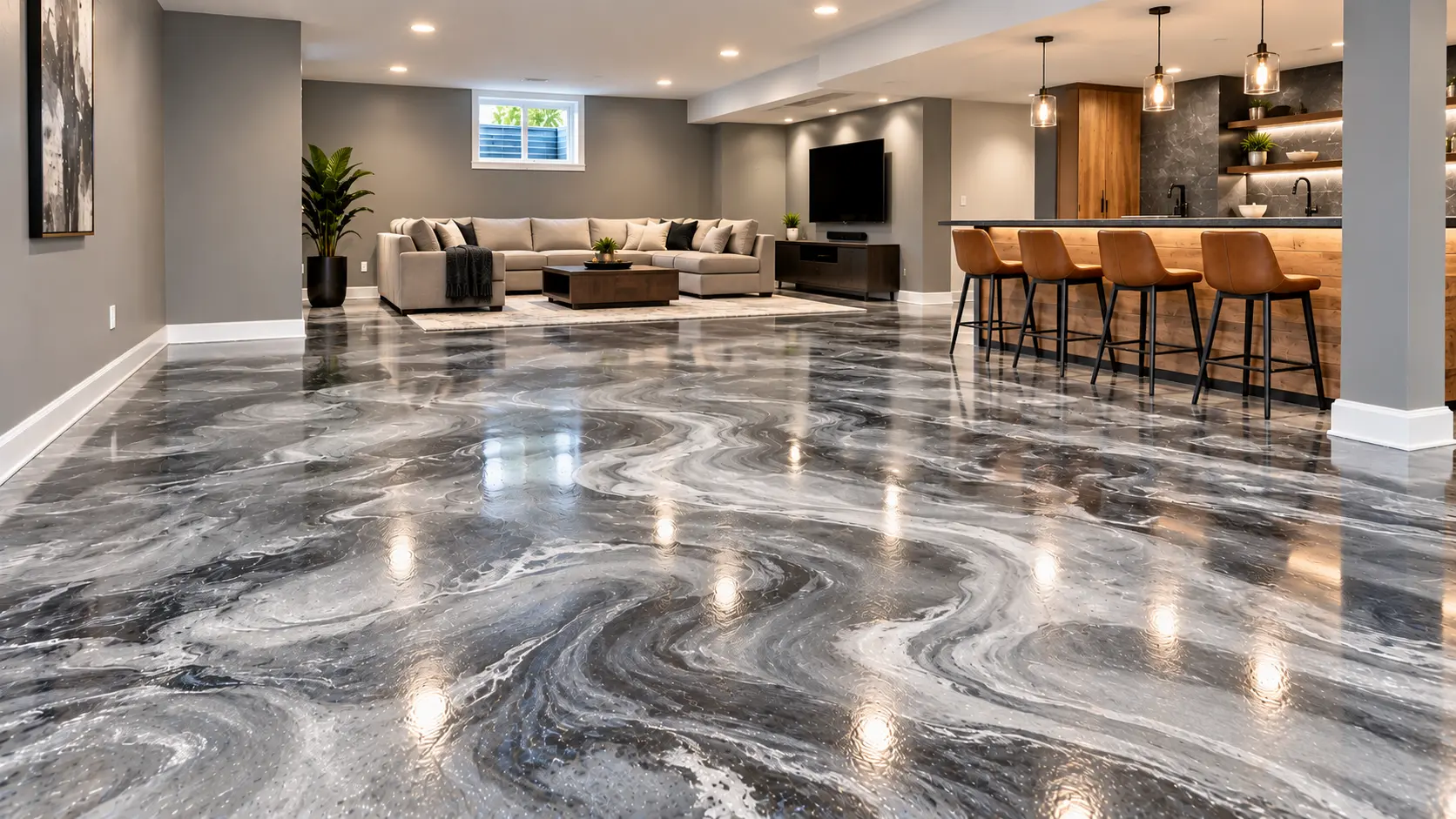
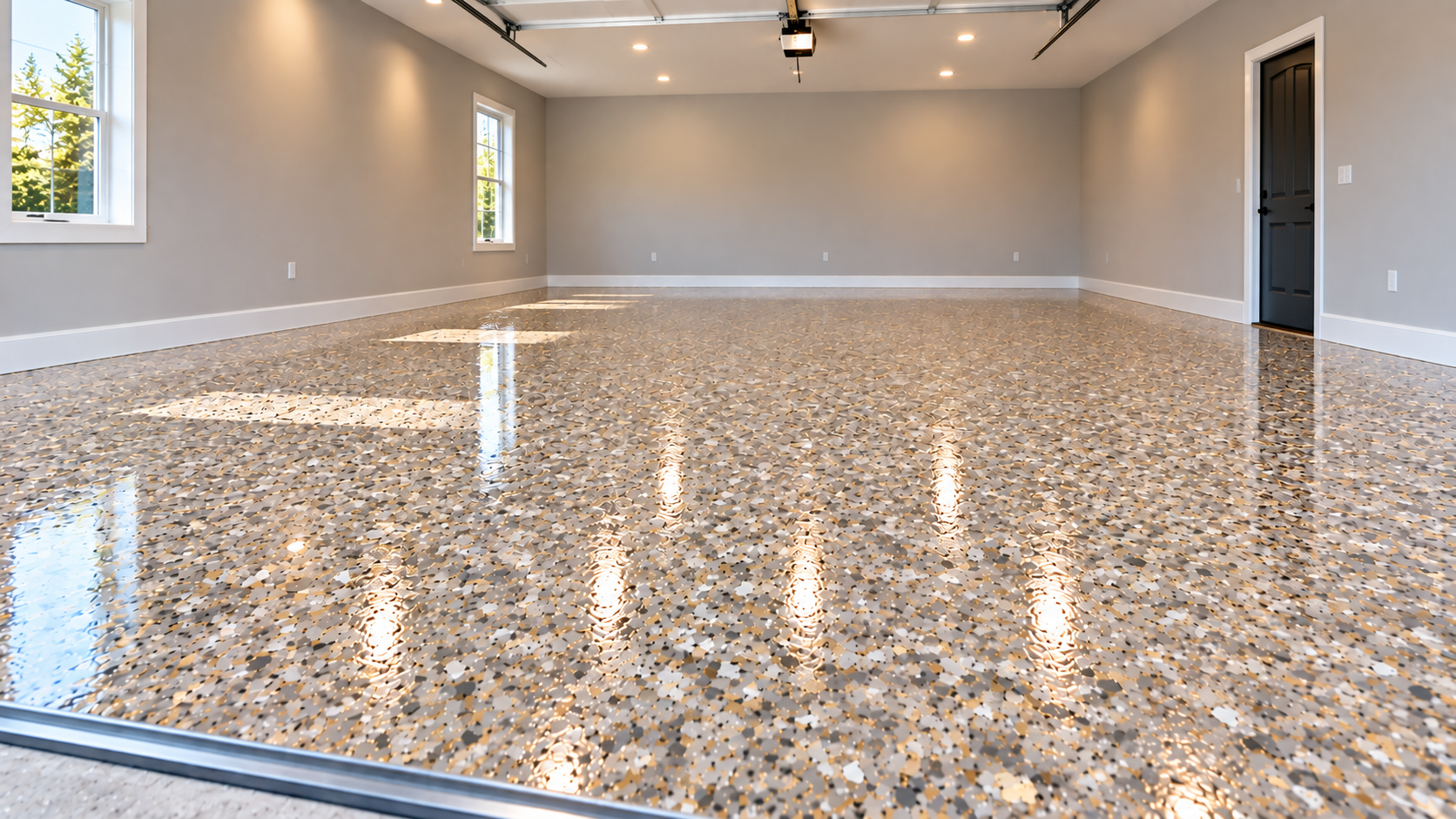
Compare swirled mica and mica flakeSwirled mica is the look most people mean when they search for metallic epoxy: long, flowing movement with real depth. Mica flake trades the swirl for sparkle, with small mineral pieces spread across the whole floor. Both are mica floors, but they look and feel different, so it helps to know which one you’re picturing.
| What Changes | Swirled Mica | Mica Flake |
|---|---|---|
| The Look | Wide ribbons and soft pools of color that flow into each other, often compared to marble or moving water. | An even field of small, glinting flakes, closer to natural stone or granite than to marble. |
| How It Is Made | Epoxy mixed with mica pigment is poured and shaped while still wet, then sealed with a protective topcoat selected for the job. | Mica flakes are broadcast into a wet epoxy base coat, then sealed with a protective topcoat selected for the job. |
| Texture | Typically smooth and glassy underfoot. The swirls are inside the coating, not raised on top of it. | Typically a light texture from the flakes under the topcoat. The final feel depends on how the topcoat is built up. |
| Sheen & Grip | A deep, high-gloss shine. A slip-resistant additive can go into the topcoat; more grip means a little less gloss. | Glossy with sparkle. The same slip-resistant option and grip-versus-gloss balance apply, so talk it through at your estimate. |
| Best For | Rooms where the floor is meant to be the centerpiece, such as living areas, entries and showrooms. | Busier spaces, where a speckled pattern is more forgiving of everyday dust and grit. |
Not sure which style your inspiration photo shows? Bring it to your free estimate. We’ll tell you which one it is and what it would take to get that look on your floor.
You don’t need a finished design to get started. Every mica floor comes down to four choices, and knowing which way you lean on each one gets you to the right floor faster.
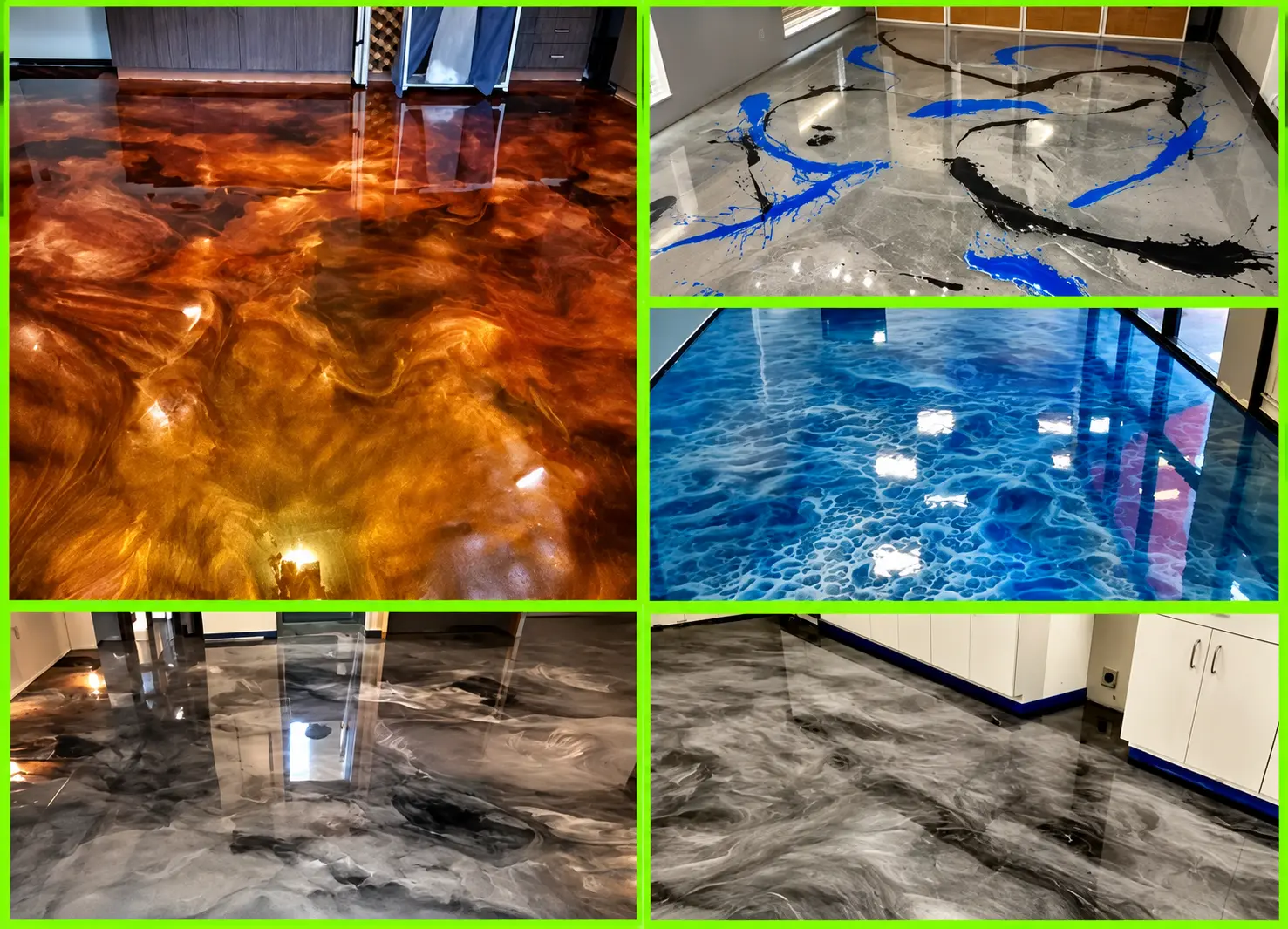
Warm tones like copper, bronze and gold, cool tones like blue, silver and charcoal, or soft neutrals. Pick the direction first; the exact colors come from the standard options we review with you.
Tones that sit close together give a calm, subtle floor. Pair a dark base with bright accents, like charcoal with silver, and every swirl stands out from across the room.
Some people want gentle movement that reads almost like stone; others want bold, sweeping swirls. With mica flake, you’re choosing how much sparkle shows instead.
Mica shows its deepest color under a glossy finish, but not every room needs a mirror shine. Tell us what you picture, and we’ll tell you what suits the style and the space.
Standard color options are reviewed at your estimate. Save two or three photos you like and note what draws you to each one: the color, the movement or the shine. That’s all we need to start.
Mica reflects light, so a mica floor never looks exactly the same twice. It shifts with the time of day, the bulbs overhead and where you stand. That’s a big part of its appeal, and it’s also why a photo online can look different from the floor in your own home.
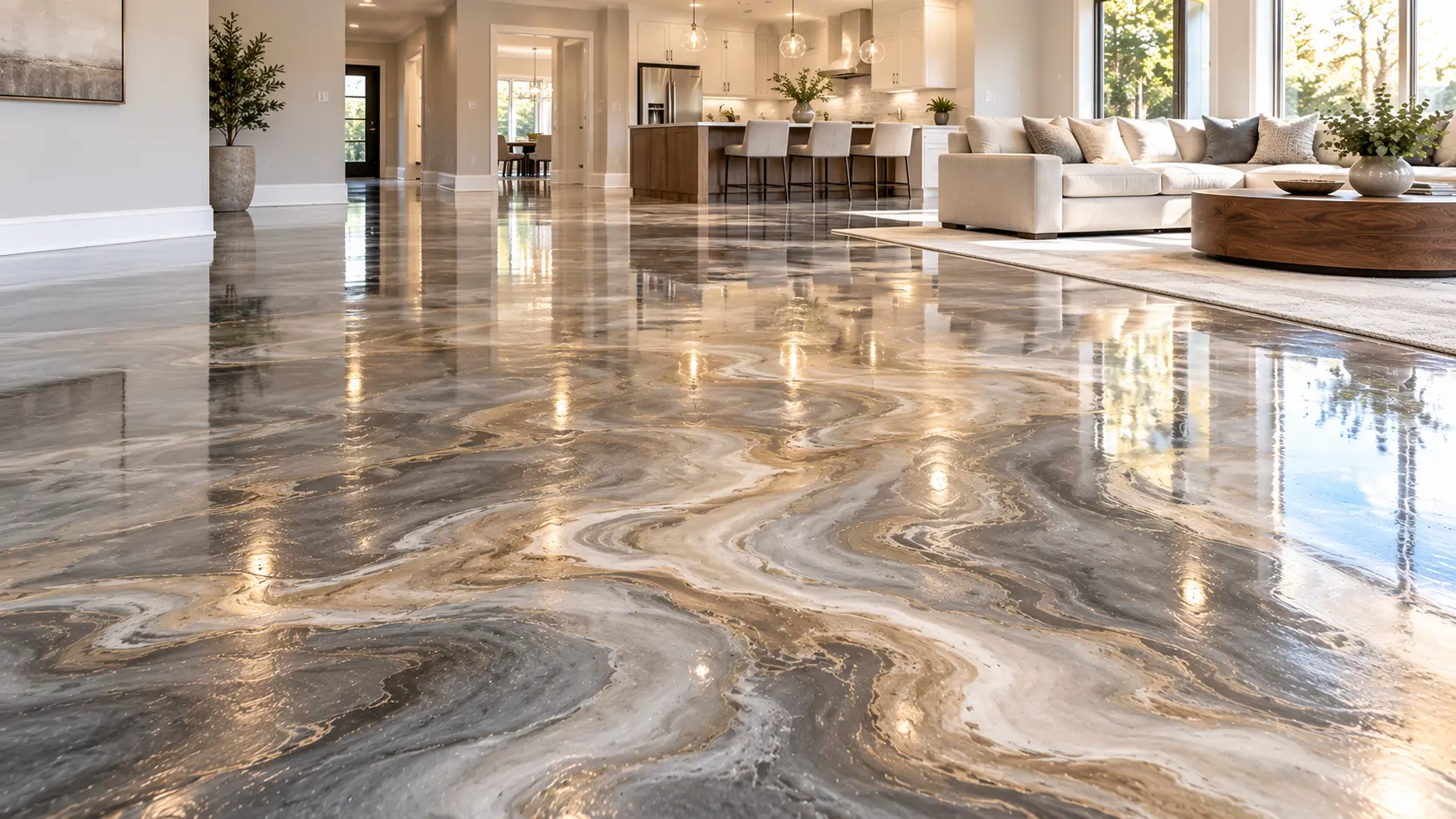
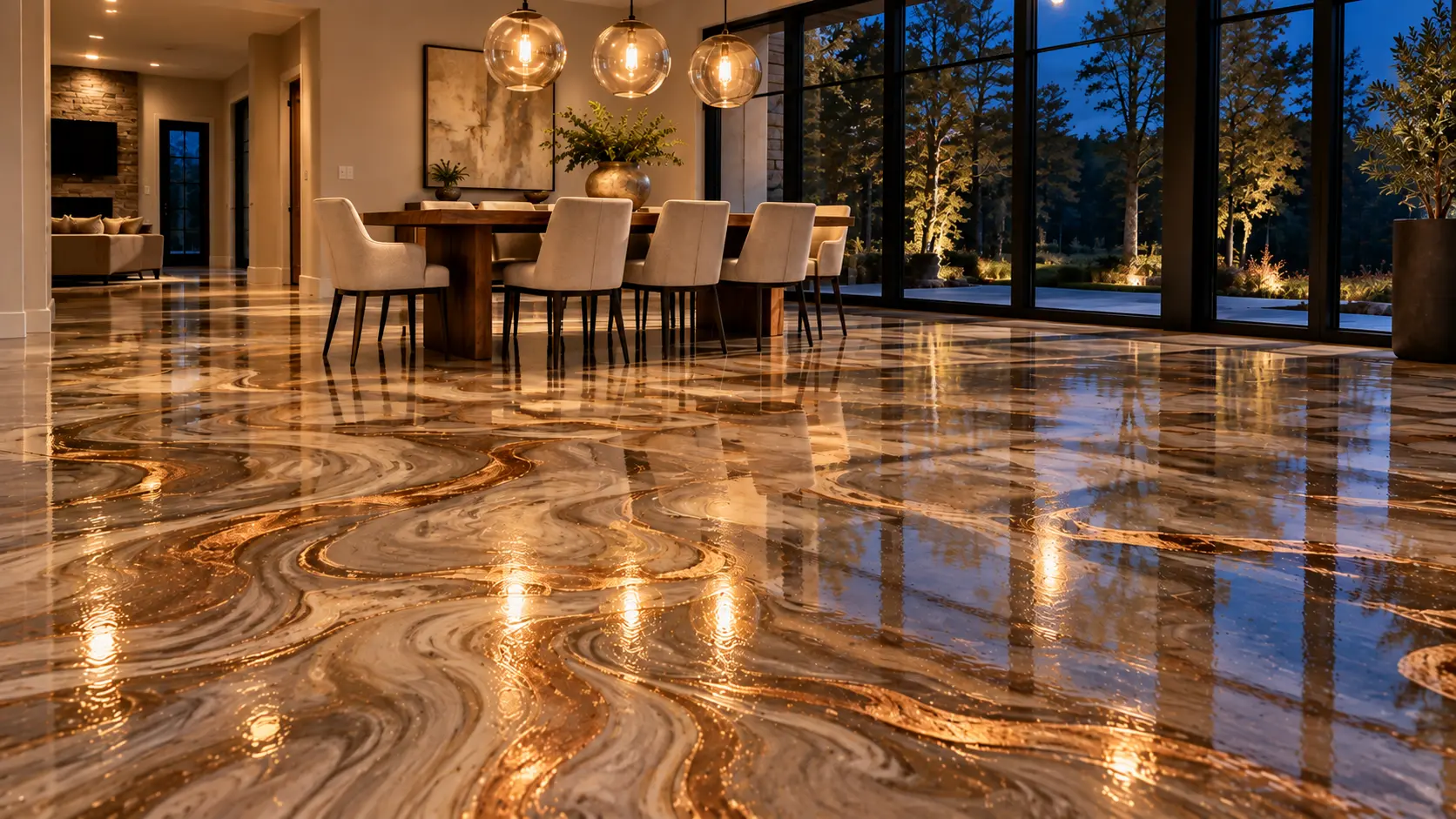
Sun from windows and patio doors lights up the swirls and pulls out the pearl and gold tones. Rooms with lots of glass show the most movement.
After dark, fixtures create bright pools of shine. Cool white bulbs lean toward silver and blue tones, while warm bulbs bring out gold, copper and cream.
In a dim room, the shimmer quiets down and the floor reads more like soft stone. Higher-contrast designs keep their pattern better when the lights are low.
Look across the floor toward a light and the mica flashes; look straight down and you see more color. Many photos are taken low and into the light, so standing up, expect a softer look.
Tell us about your light at the estimate: which way the windows face and what bulbs you use. It helps narrow down the colors that will look best in your space. Very sunny rooms need one more conversation, so see our sunny-room care tips.
Mica isn’t just for garages. We install it in homes, basements, workshops, barns and businesses across Whitmore Lake, Ann Arbor, Brighton and nearby towns. Here’s how it fits each kind of space.
Mica turns a garage into a space you’ll want to show people. Everything garage-specific, from road salt and hot tires to the other coating systems, is on our garage page.
Explore garage floor coatings
A mica floor gives a basement lounge, bar or media room a finished, high-end feel. Below grade, moisture testing comes first, and our basement page explains how that works.
Explore basement floor coatings
Swirled mica is at its best where people see it first: a front entry, an open living room or a kitchen that flows into both. Plan where it starts and stops, and how it meets wood, tile or carpet next door.
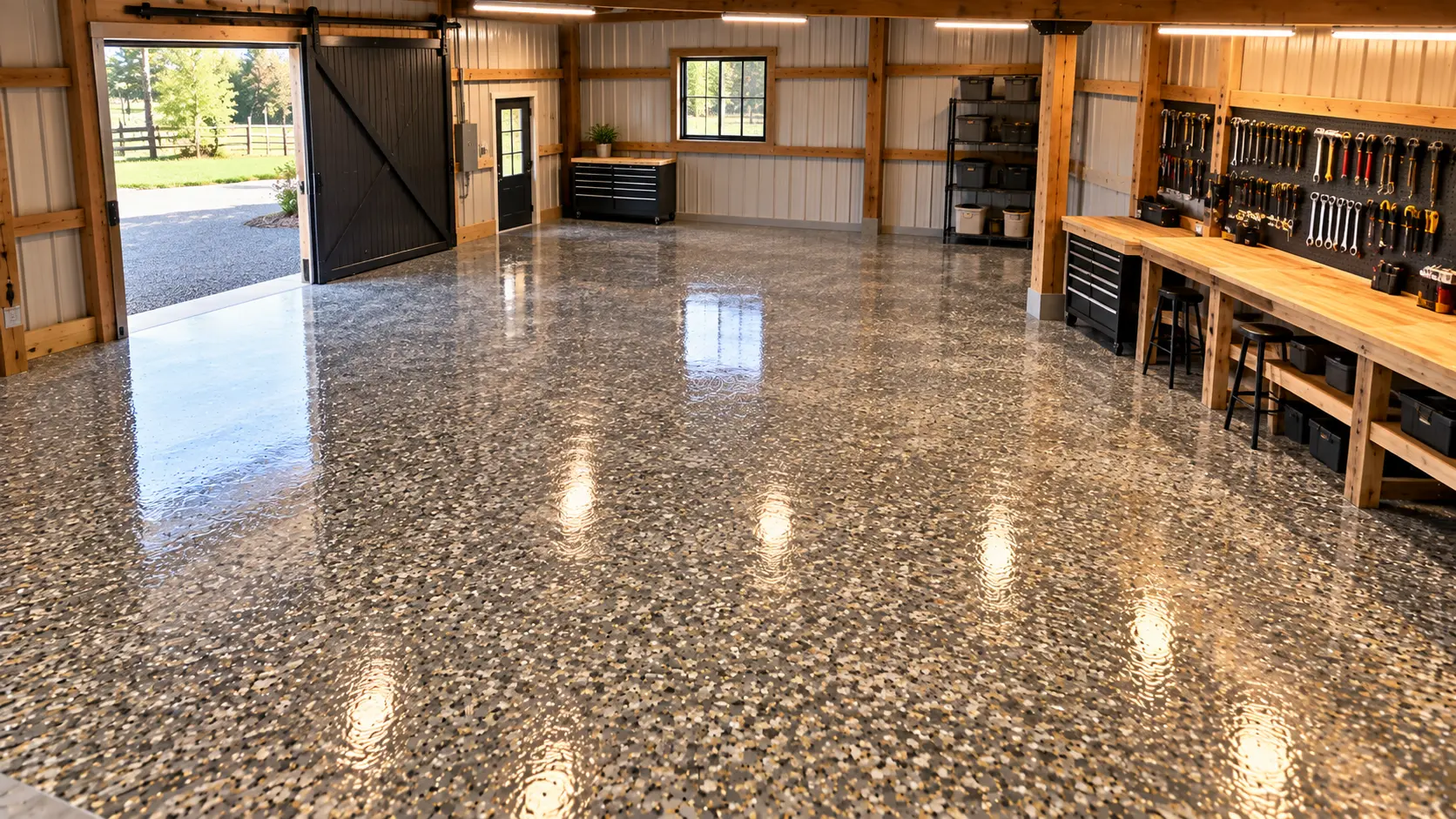
A workshop or finished barn can get the same showpiece look as the house, or a mica flake finish with more texture underfoot. Tell us how the space is used, whether it’s heated and which areas you want done.
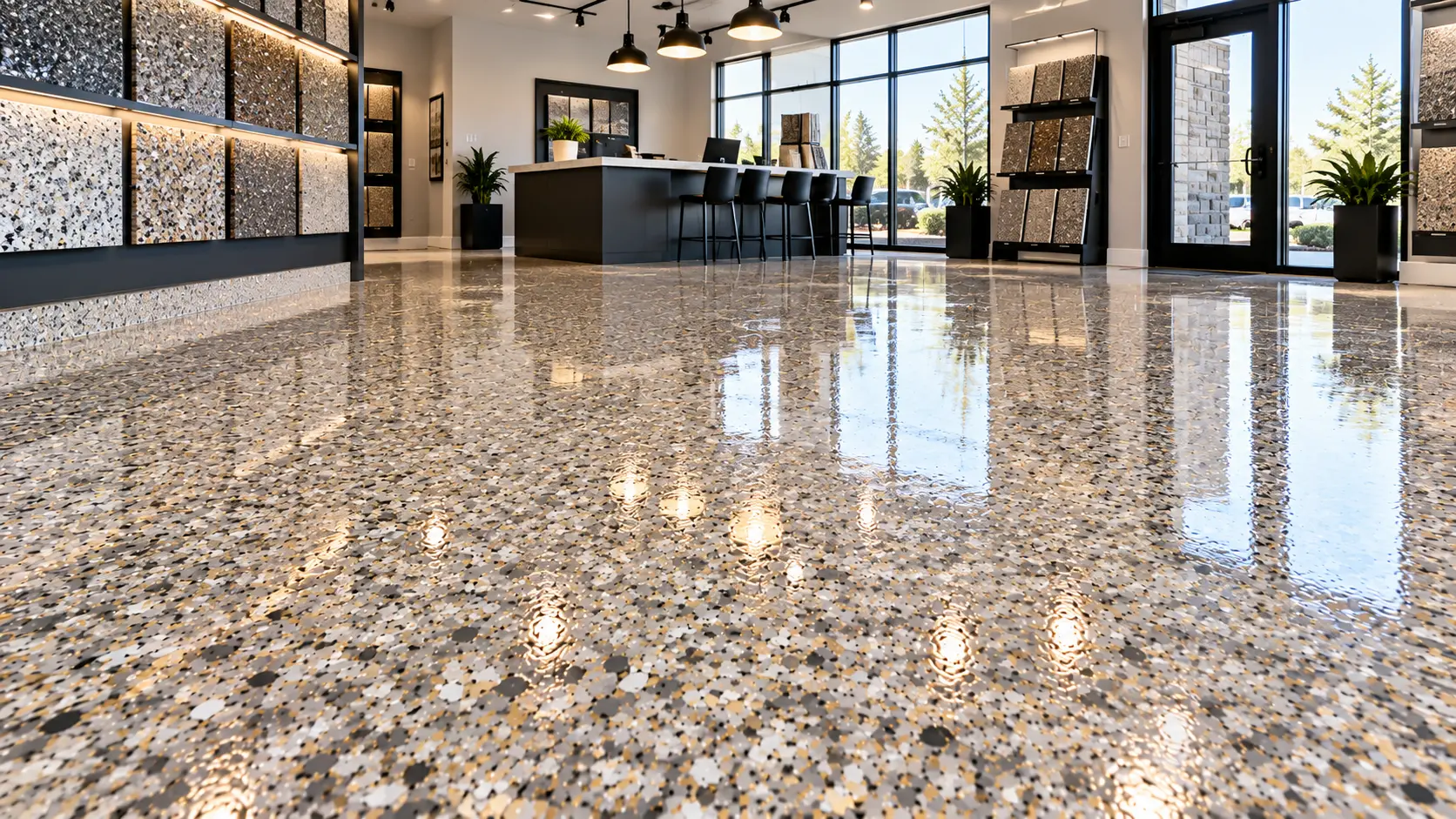
In a showroom, salon, office or reception area, the floor is part of the first impression. Let us know which areas customers see, how busy they get and when the space can be closed for the work.
When you request your estimate, tell us which space you’re planning and its rough size. A few photos of the current floor help too.
A mica floor only looks as good as what’s underneath it. Before we recommend a finish, we look at the floor you have now. Prep is matched to your slab’s condition: moisture testing, removing old coatings where needed, and repairing cracks and damaged concrete.
| Existing surface | Suitability for mica |
|---|---|
| Concrete |
Best fit
Concrete is the best base for mica. Its condition and moisture test results tell us how much prep it needs before any coating goes down. |
| Tile or old epoxy |
Evaluated case by case
We’ll only coat over an existing finish if it’s firmly bonded and can be properly prepared. If it’s loose or failing, it has to come up first. |
| Wood subfloor |
Generally not a good fit
Wood flexes and moves with humidity, which doesn’t suit an epoxy floor. If there’s wood under your current flooring, let us know up front. |
A coating is not waterproofing. Water problems need to be fixed by the right professional first, and we moisture test the concrete before any coating goes down.
A mica floor is easy to live with. Keep grit off it, clean it gently and skip the harsh products, and the shine and depth stay looking their best.
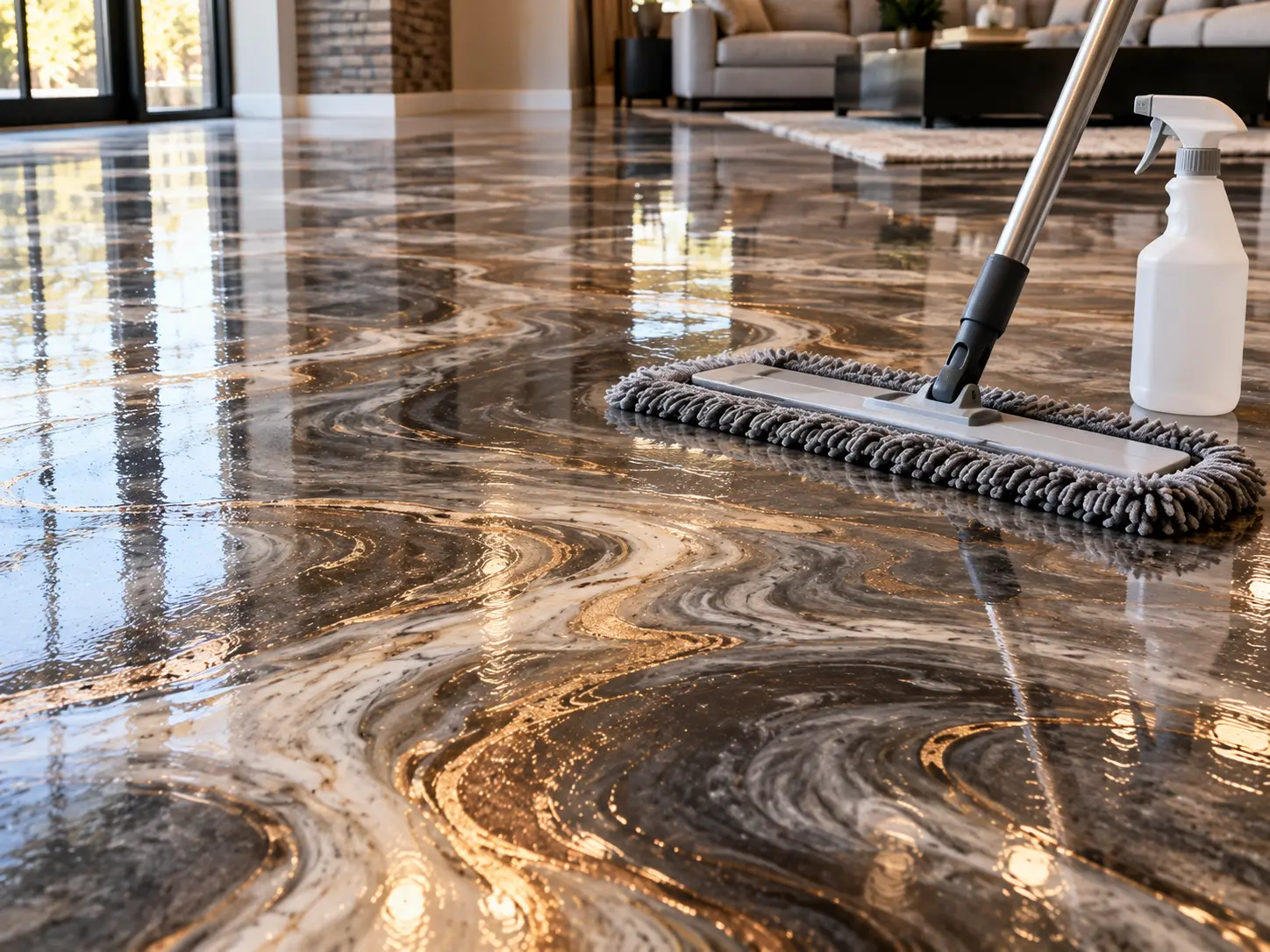
Stronger isn’t better here. Harsh products can dull the protective topcoat.
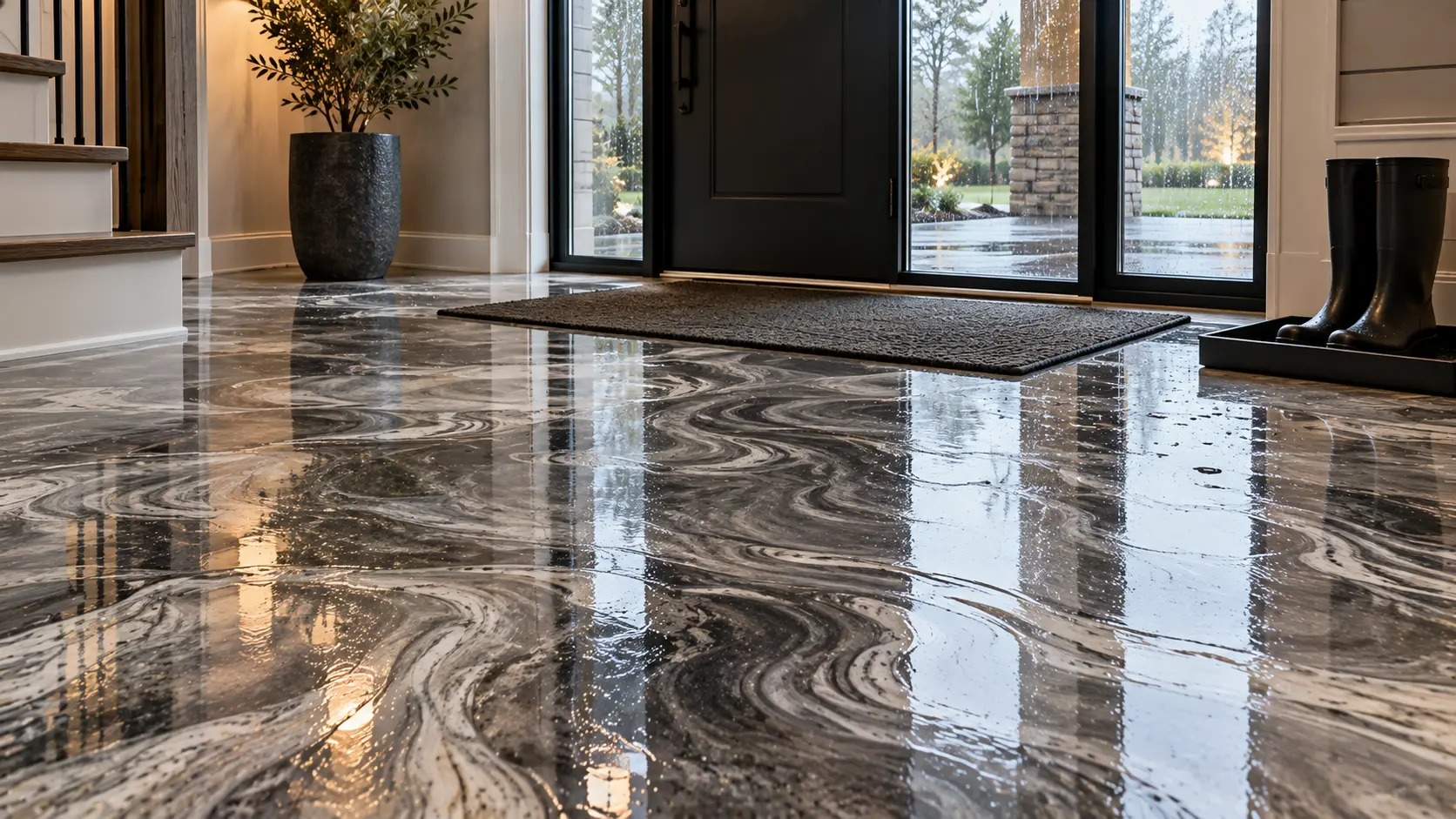
Like any glossy floor, mica can be slippery when wet. For entries, mudroom paths and garages, a slip-resistant additive can go into the topcoat. More grip means a little less gloss, and we’ll help you find the right balance at your estimate.
In rooms with strong, direct sun, epoxy can amber (take on a slight yellow tint) over time. If your floor gets a lot of sun, tell us at the estimate. A UV-resistant topcoat may be recommended.
Tell us about the space and the look you’re after, from a swirled mica living room to a garage, barn or showroom. Licensed and insured, 3rd Coat Restoration designs and installs swirled mica and mica flake floors in Whitmore Lake, Ann Arbor and nearby communities, backed by more than 40 years of family experience in the trades. Estimates are free.
Call 248-692-3655 Email [email protected]
Locally owned by Anthony Williams.
Based in Whitmore Lake, Michigan 48189.
Serving Whitmore Lake, Ann Arbor, Brighton, South Lyon, Dexter, Chelsea, Ypsilanti, Saline and Pittsfield Township.
Tell us which room or space you’re planning, its rough size, what’s on the floor now and the colors or looks you like. Photos of the space and any inspiration pictures help.
Our Whitmore Lake crew pours swirled mica and lays mica flake floors in garages, basements, living spaces, entryways, workshops and commercial rooms throughout the surrounding towns.
Mica epoxy for garages, basements and living areas in Whitmore Lake and the eight towns below. Tap a town for its own page.
Winter slush and road salt get tracked into local garages, so the mica topcoat can include a slip-resistant additive for better footing. Basement slabs are moisture tested before any coating goes down, and rooms that catch strong afternoon sun may call for a UV-resistant topcoat to help the color hold.
In every town on this list, the planning looks the same: what shape the slab is in, how the room gets used and whether a swirled pour or mica flake suits it better.
Share where the property is and which room you want coated, and you will hear back on whether the trip makes sense.
Quick answers to the questions homeowners and business owners in Whitmore Lake, Ann Arbor, Brighton and nearby towns ask most about swirled mica and mica flake floors.
It’s a decorative epoxy floor with mica, a natural reflective mineral, built into it for shimmer and depth. We install two styles: swirled mica and mica flake. Both are sealed with a protective topcoat selected for the job.
Mostly, yes. What many companies call metallic epoxy is the swirled mica look: pigment worked through wet epoxy for flowing, marble-like movement. Mica flake is a different, speckled style.
Swirled mica has broad, flowing movement and typically a smooth, glassy feel. Mica flake is an even field of small sparkling flakes with a little more texture. See the side-by-side comparison.
Yes. The pattern forms as the floor is installed, so no two are identical. We can aim for the colors, contrast and movement in a photo you like, but not copy it swirl for swirl.
Yes. You choose a color direction, how much contrast you want and how much movement or sparkle shows. Standard color options are reviewed at your estimate. See how to design your mica floor.
Any glossy floor can show scratches from grit and dragged furniture. Sweeping often, using felt pads and keeping mats at the doors helps protect the finish. The protective topcoat is selected for how the space is used.
It can be slippery when wet, like most glossy floors. A slip-resistant additive can be added to the topcoat, and more grip means a little less gloss. We’ll talk through the right balance for your space.
It depends on the surface prep, the style and how the space is used. Good preparation and routine care make the biggest difference. Warranty details are provided with your estimate.
Yes. Both swirled mica and mica flake can go in a garage. For garage-specific questions like hot tires and road salt, see our garage floor coatings page.
Yes, once the concrete passes moisture testing. A coating is not waterproofing, so any water problems must be fixed by the right professional first. Learn about basement moisture testing.
Yes, when the surface underneath is concrete or an existing finish that passes evaluation. Living areas and entries are where swirled mica shows off most. Tell us where the floor should start and stop, and what it meets next door.
Yes. Showrooms, salons, offices and reception areas are all options. Let us know how much foot traffic the space gets and when it can be closed for the work.
Sometimes. An existing finish is evaluated case by case and must be firmly bonded and properly prepared; loose or failing tile or coatings come up first. Wood subfloors are generally not a good fit.
Epoxy can amber over time in strong, direct sun. If your room gets a lot of sun, tell us at the estimate, and a UV-resistant topcoat may be recommended.
Sweep or dust-mop grit, then damp-mop with warm water and a pH-neutral cleaner. Skip bleach, ammonia, vinegar, citrus cleaners and abrasive pads. See our full care tips.
It depends on the look you want. Mica suits a showpiece floor with depth and movement, standard flake gives a speckled everyday finish, and polished concrete (garage floors only) lets the concrete itself be the look. Compare garage floor systems.
Cost depends on the size of the space, the condition of the concrete, the prep needed, the style and the design you choose. Every floor is different, so we quote each one individually, and your estimate is free.
Yes. 3rd Coat Restoration is licensed and insured, locally owned by Anthony Williams in Whitmore Lake, with more than 40 years of family experience in the trades.
We install mica floors in Whitmore Lake, Ann Arbor, Brighton, South Lyon, Dexter, Chelsea, Ypsilanti, Saline and Pittsfield Township, across Washtenaw, Livingston and southwest Oakland counties.
Have a question about your space or a look you’ve seen? Ask us when you request your estimate.